
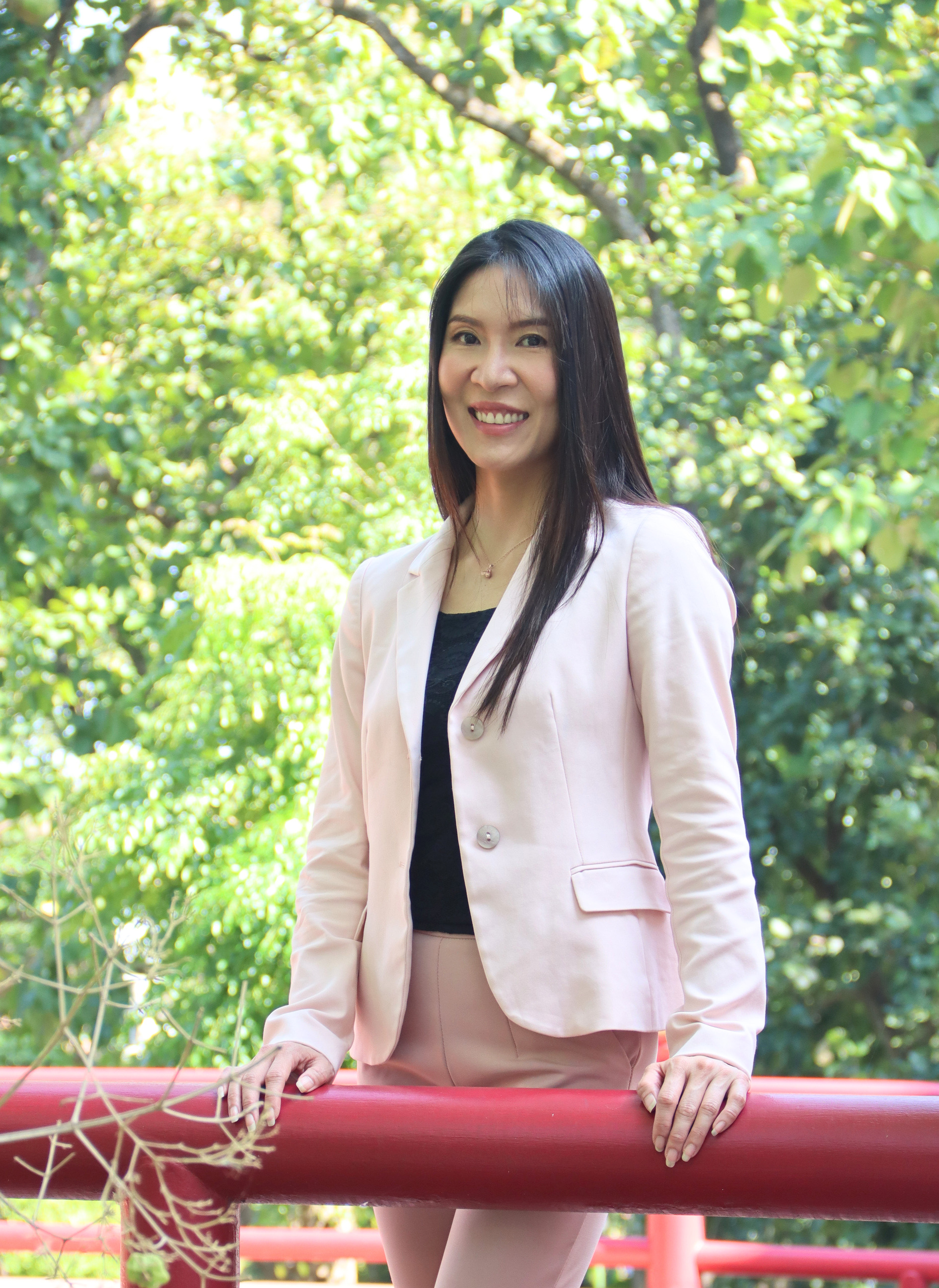
This is part of the Mensa Member Stories series where we have conversations with Mensa members in Thailand, looking beyond IQ scores to discover the ideas, experiences, and perspectives that shape who they are.
Name: Arada Kantahong
MBTI Personality: INTJ
Tell us a bit about yourself, and how you first discovered Mensa
I’m happiest when I’m learning and understanding something new. Wherever life takes me, I always make a beeline for the museums, galleries, and local book stores.
My background is in linguistics, education, and business. I was a lecturer at Chiang Mai University before moving on to further studies and career opportunities in the UK.
It was during my time at the University of Warwick that I first came across the name Mensa, but it wasn’t until several years later that I properly looked into it and eventually decided to take the Mensa test myself here in the UK.
Living in the UK has led me to become involved with Mensa, where I currently serve as SIG secretary and editor for British Mensa. I also serve as Chair of the Founding Committee for the Mensa Thailand Initiative.
Before joining Mensa, what was your life like?
IQ isn’t something widely studied or talked about in Thailand. When I was growing up, IQ was mostly seen as just a number on a test, rather than something people really understood. So, the idea of a high-IQ society, where tested and qualified members could come together and be part of an international network, seemed to be so novel to me at that time.
These days, modern science has confirmed that people with high IQs often see and process things a bit differently. Looking back, though, life wasn’t always easy for me, especially at school and university. I was the person constantly putting my hand up and asking a million questions. At that time, I had no idea it could annoy people so badly. I was just naturally curious and wanted to understand things properly.
I’ve always enjoyed solving puzzles, exploring ideas in depth, and connecting different concepts to better understand the bigger picture. Even as a kid, I was more into analysing and explaining things in a systematic way than casually chatting with people. And honestly, I still am. I probably came across as just weird, or kind of different.
Over time, I’ve learned that not every thought (and question!) needs to be shared. Being yourself is important, but so is knowing what to say, what to keep private, and when to simply adapt.
What have you learned after becoming a Mensa member and how has it changed your life, if at all?
I’ve learned that people see the world through their experiences and beliefs. What seems “weird” in one environment can be totally “normal” in another, so society’s judgements aren’t always the absolute truth.
Intelligence is just one part of who we are, not a measure of a person’s worth. Being highly intelligent is simply one trait among many, and it’s not something overly strange or extraordinary. Once you understand that, there’s less need to explain or prove anything to others. You can focus instead on growing your strengths, handling your limitations, and making the most of what you have, both for yourself and for others.
Apart from serving British Mensa, and the Mensa Thailand Initiative, I also work for Intertel – an international society for the Intellectually Gifted. There, I’ve met people from all kinds of backgrounds, from military pilots and former FBI agents, to corporate CEOs, musicians, and farmers. It really shows that real intelligence can take many forms. Being part of a high IQ society doesn’t mean you need a PhD or spend your days talking about quantum physics. You can just be a cat lover who enjoys playing music or reading about aliens!
When you find your kind of people, conversations become deeper and more meaningful. And you often grow faster simply by being around the right people.

What is the strangest misconception about high-IQ people you’ve ever heard of?
Some theories you see online about high-IQ people are true, but many are inaccurate or exaggerated.
Films and TV often portrayed them as mysterious psychopaths in a hoodie, fast-talking weirdos, cold computer geeks who talk like a robot, or ultra-confident billionaire masterminds. Sherlock Holmes is another classic stereotype.
But I can tell you that, after so many years of meeting high-IQ fellow members from all over the world, I’ve met many strange people (still!) but never a single one who actually looks or behaves like those stereotypes. Or at least, not yet!
Intelligence in real life can be hiding in plain sight. You may have walked past them on the street, chatted with them at the supermarket, or worked beside them without ever realising it. Many highly intelligent people don’t see or call themselves a “genius”. They simply live ordinary, down-to-earth lives.
What challenge in your life taught you something no IQ test could measure?
High intelligence comes with both advantages and challenges. The mind that’s good at critical thinking can also overthink, analyse every possible outcome, and get stuck chasing the perfect answer.
The same mind that generates many great ideas can also keep you awake at 3 a.m. running through endless “what ifs” and worries!
In social situations, their different ways of thinking or behaving can sometimes be misread and make relationships harder to form.
All in all, high intelligence doesn’t guarantee instant happiness, success, or good relationships. Those challenges are more about personality, self-awareness, and emotional skills – things an IQ test can’t measure and everyone has to learn to calibrate for themselves.
A sharp mind is just one ingredient in the recipe.
For someone who thinks Mensa ‘isn’t for people like them,’ what would you want them to know?”
Many people think high intelligence means having high education, a fancy degree, perfect test scores, a look of the genius, or a wealthy background to start with. But that’s a misconception.
High intelligence and those qualities are not necessarily correlated. Some are happy with ordinary jobs while others pursue ambitious careers, and some have no formal degrees at all. What we actually share is just one core trait: the ability to think clearly and see beyond the surface.
Everything else builds from there.
What ambitions or hopes do you have for the future of Mensa Thailand or Thailand in general?
Because high intelligence can come from anywhere, many brilliant people go completely unnoticed, by society and sometimes even by themselves.
Thailand already has great programmes supporting talented students and top professionals. However, people outside formal or elite education systems can have just as much potential if given a chance to discover it. That is exactly where our initiative comes in. As a high-IQ society, Mensa creates an equal opportunity for anyone to prove their potential regardless of their background.
People with high intelligence often find it easy to think outside the box. They connect ideas quickly and understand situations from different angles.
Their curiosity, self-motivation, and love of learning can be valuable assets to society driving innovation and human capital development. That has been a personal vision of mine for years.
Through my work with the Mensa Thailand Initiative, I’m trying to broaden the understanding of giftedness and high intelligence within Thailand and help connect this often-hidden talent pool with opportunities for social good.
We’re still a small group in the early stages, but I hope we can build strong partnerships with relevant organisations and authorities, and help turn this potential into something that benefits Thailand’s future.
Leave a Reply